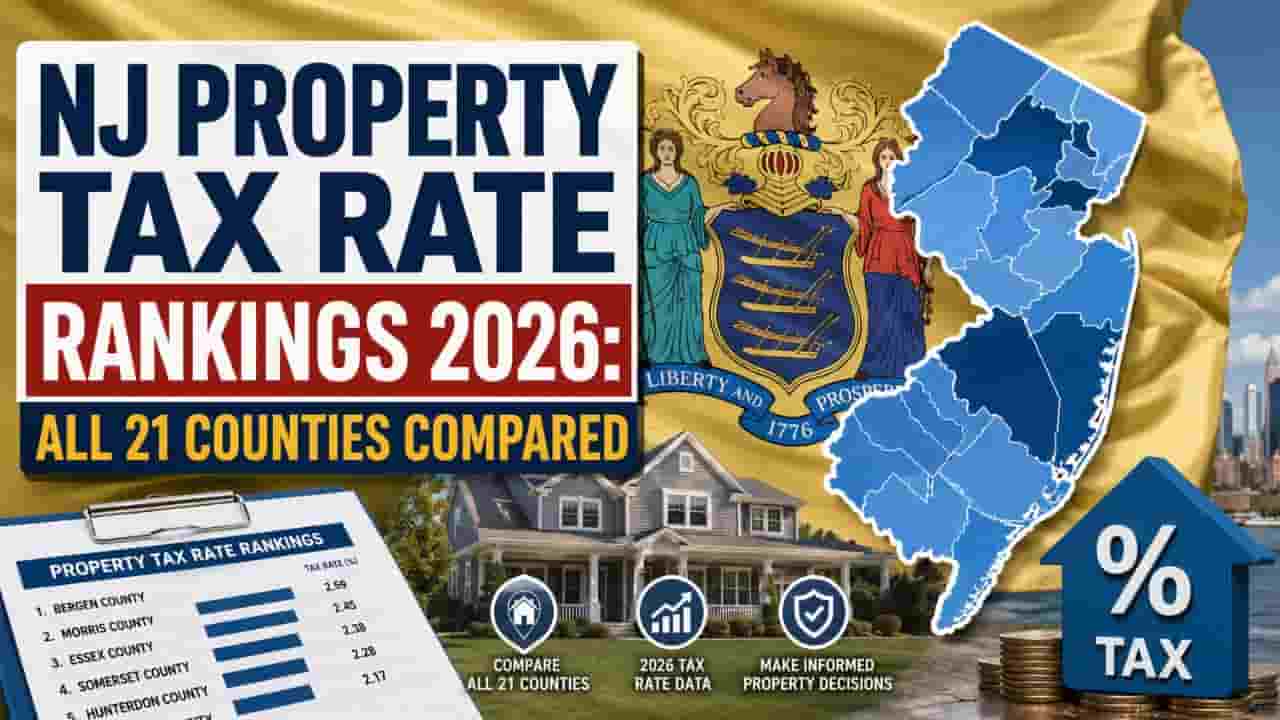
New Jersey is synonymous with high property taxes, but for the savvy homebuyer in 2026, the “Garden State” actually offers pockets of significant tax relief. While the statewide average effective tax rate hovers around 2.23%, a closer look at the southern and rural counties reveals a much different story. If you are looking to maximize your purchasing power and lower your monthly mortgage commitment, understanding where the tax burden is lightest is critical. This guide provides an authoritative, data driven comparison of the top 5 NJ counties with the lowest property taxes, integrating 2026 effective tax rates and median bill data to help you find your next home.
The 2026 Property Tax Landscape, Why Location is Everything
In New Jersey, property taxes are the primary source of funding for local schools and municipal services. This decentralization creates massive disparities between counties. While an average home in Essex County may face a $14,000+ annual tax bill, a similar home in Cape May or Cumberland could be taxed at half that amount.
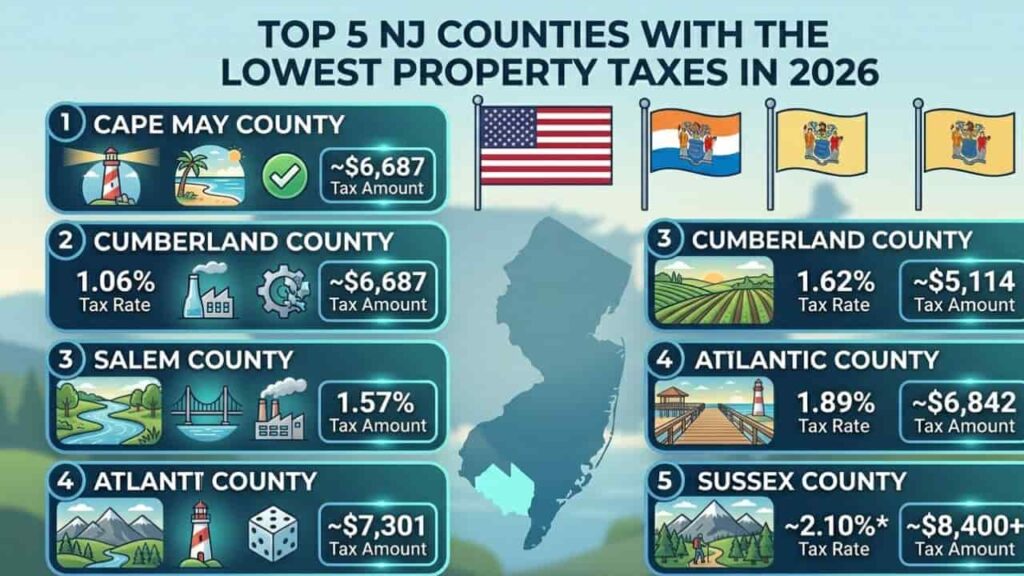
Top 5 Lowest Tax Counties, 2026 Statistical Comparison
| Rank | County | 2026 Effective Tax Rate | Avg. Annual Tax Bill |
| 1 | Cape May County | 1.06% | $6,687 |
| 2 | Cumberland County | 1.62% | $5,114 |
| 3 | Salem County | 1.57% | $6,842 |
| 4 | Atlantic County | 1.89% | $7,301 |
| 5 | Sussex County | 2.10%* | $8,400+ |
Note. Sussex County rates vary significantly by township following the 2026 equalization updates.
1. Cape May County The Gold Standard for Low Rates
As of 2026, Cape May County remains the champion of low property taxes in New Jersey, boasting an effective rate of just 1.06%. This is primarily due to the high density of valuable shore properties and vacation homes which broaden the tax base.
- Top Towns. Avalon (0.54%), Stone Harbor, and Cape May Point.
- Why it Ranks High.
The abundance of seasonal residents contributes to school and municipal funding without placing a heavy burden on year round residential services.
2. Cumberland County The Lowest Total Dollar Bill
While its effective rate is slightly higher than Cape May’s, Cumberland County often boasts the lowest total dollar amount on tax bills in the state, averaging approximately $5,114 in 2026.
- The Intent
This is an ideal market for first time buyers looking for entry level pricing. Low median home values combined with moderate rates make this the most affordable entry point into NJ homeownership. - Key Consideration
Lower tax bills here are often a reflection of lower property valuations rather than just low rates.
3. Salem County Rural Affordability
Salem County remains a stronghold for agricultural and rural affordability. With an effective tax rate of 1.57%, it offers a significant discount compared to the suburban sprawl of North Jersey.
- Best For
Buyers seeking land and “farmette” styles. - Tax Tip
Many properties here qualify for Farmland Assessment, which can further reduce property taxes for eligible agricultural use.
4. Atlantic County, Coastal Balance
Atlantic County strikes a balance between coastal amenities and manageable tax rates, with a 2026 effective rate of 1.89%.
- Market Dynamics
While Atlantic City has its own unique tax structure, surrounding towns like Egg Harbor Township and Galloway offer competitive rates that appeal to families and retirees. - Average Bill
Homeowners here see an average annual bill of roughly $7,301, significantly below the state average of $10,570.
5. Sussex County, The Northern Exception
For those who need to stay in North Jersey for work but want to escape the high taxes of Bergen or Morris, Sussex County is the premier choice.
- Equalization Impact
Following the 2026 reassessment projects, towns like Walpack Township have maintained exceptionally low residential burdens, with some bills as low as $1,156. - Strategic Move
Sussex provides a “rural buffer” where school taxes are often lower due to smaller student populations in specific districts.
Step by Step Guide Comparing Taxes Before You Buy
When searching for a home in these low tax counties, follow this professional workflow.
- Check the Equalization Table
Don’t just look at the current bill. Search for the 2026 County Equalization Table to see the town’s “Ratio of Assessed to True Value.” - Verify the School Budget
School taxes typically make up 60% or more of your NJ tax bill. Check if the district has recently passed a major bond referendum for school construction. - Search for PILOT Programs
Some new developments in these counties use Payments In Lieu of Tax, which can offer predictable (though sometimes higher) costs over 10 to 30 years.
Summary, Finding Your Tax Haven
Understanding New Jersey’s real estate market in 2026 doesn’t have to mean accepting an $11,000 tax bill. By focusing your search on Cape May, Cumberland, and Salem counties, you can drastically reduce your annual overhead. Whether you are looking for a coastal retreat or a rural farmhouse, these five counties represent the best opportunities for tax conscious homeownership in the Garden State.
Conclusion
Buyers searching for lowest property taxes in NJ should prioritize Cape May County for the lowest effective rates and Cumberland County for the lowest total dollar bills. By analyzing the 2026 effective tax rates and municipal school funding, you can secure a home that fits your budget. Use our NJ Tax Calculator to compare these counties side by side today.
FAQs
Which town has the absolute lowest property tax in NJ?
As of 2026, Walpack Township in Sussex County and Teterboro in Bergen County consistently record the lowest residential tax bills, often under $2,000, due to their unique municipal structures.
Is Burlington County considered a low tax county?
Burlington County is famous for having the lowest average “County” portion of the tax bill, but its municipal and school taxes can still be high, making its total bill higher than Cape May’s.
Do low property taxes mean bad schools?
Not necessarily. In counties like Cape May, the high volume of vacation rentals funds the schools, allowing permanent residents to enjoy high quality education at a lower personal tax cost.
Will my taxes go up after I buy a home in a low tax county?
Possibly. In NJ, a sale can trigger a reassessment or town wide revaluation. Always check when the town last performed a revaluation before committing to a purchase.
Are there extra taxes for shore properties?
While property taxes are lower in shore counties, you may face higher Flood Insurance premiums, which can offset your tax savings. Always factor in total “PITI” (Principal, Interest, Taxes, Insurance) costs.